The Wondrous Secrets That Unfold After Launching a Website
Think launching a website is the hard part? Wait until you see what happens next

Image generated by ChatGPT
Have you ever wondered what happens behind the scenes of a functional webpage?
What kind of maintenance is involved?
Do creators really bother with upkeep?
I certainly did — until I launched one myself.
A Simple Launch, A Gentle Touch of Users
To be honest, this website was a very casual launch.
I’ve only been posting about it on my Substack, and I haven’t even listed it on Product Hunt or anywhere else.
Yet, despite that, nearly 100 users signed up, and a handful even became paying customers.
With such a small user base, you’d think maintenance would be a breeze, right?
Not quite.
The Feedback Loop: From Legitimate to Laughable
1\. Business Emails — A Comedy of Cold Pitches
Almost immediately, my inbox was flooded with cold emails:
SEO services
YouTube promotions
Offers to get my site indexed on Google
Generic web page promotions
The funniest part? These senders would sneakily select “Bug” as the category in my contact form. So, every time I saw a new bug report, I’d open it carefully, hoping it wasn’t something complex — only to find yet another marketing pitch.
2\. My Dearest Users’ Bug Reports
Now, these are the real ones.
Most of the legitimate reports I receive are due to DeepSeek being unstable. If I get a bug report, chances are, DeepSeek is down again.
In a previous launch, I also got feature requests — like adding support for the newest Mac and Windows versions for ImageFinder. After realizing how much of a time sink those requests would be with no clear payoff, I quietly gave up on that idea.
3\. Hacker Attacks? Really?
One of the weirdest moments happened in the middle of the night. Someone found a loophole, created numerous fake accounts, and flooded me with empty feedback emails.
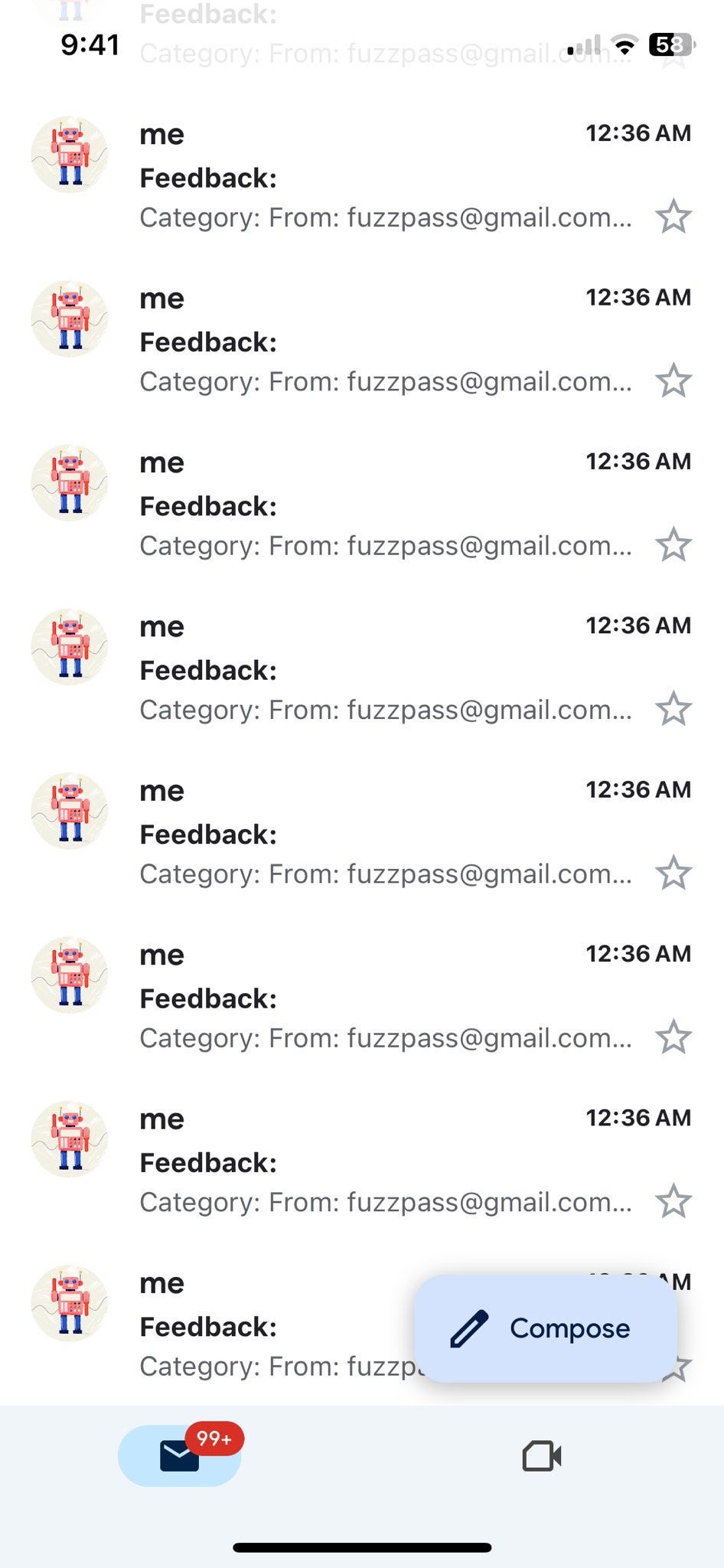
Screenshot by Jenny about the email bombarding
Do I even worth attacking?
That incident reminded me to add a blacklist function for admin users and implement proper email verification instead of leaving the form open-ended.
Other Unexpected Hiccups
The Accidental Database Wipeout
At one point, I accidentally wiped out the entire database.
Real-life lesson? Always back up before any patch — now I do it religiously.
The Timeout Saga
One persistent issue was handling timeouts. I received great suggestions — like using asynchronous processing — but async only helps my app; it can’t control the AI API’s response time.
I also experimented with streaming responses, hoping to mitigate the issue, but that just led to chopped-up, incomplete outputs. Turns out, we really do need to send the full request at once for quality results.
Finally, I tried emailing results to users. That worked! It resolved the timeout problem caused by Nginx automatically cutting off requests between the UI and backend.
The Unexpected UI Fail
One of my users sent a bug report with a screenshot, and yikes — I had no idea they were enduring such a poor UI experience!
They were just bearing with it.
That was my wake-up call to improve the mobile experience. A simple fix — adding a hamburger navigation bar — made it significantly better. Lesson learned: never underestimate a user’s intent to use a website anywhere.
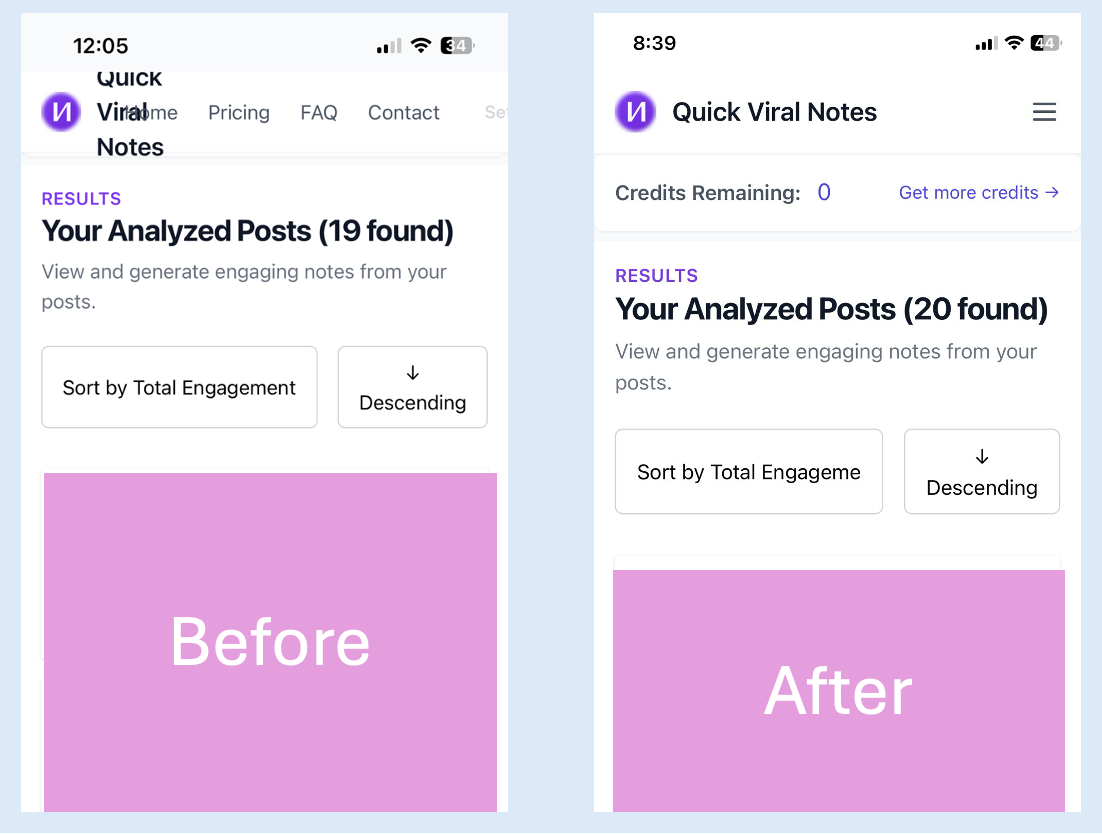
Screenshot by Jenny comparing the view from phone before and after introducing hamburger navigation bar.
New Insights and Future Plans
All in all, this journey has been eye-opening. Some takeaways and next steps:
Prompting Claude: Since my beloved DeepSeek model goes MIA from time to time, and ChatGPT is being lazy and superficial now and then, I need a reliable alternative.
Price Adjustments: With the introduction of alternative LLMs with similar capabilities, costs are at least 10 times higher compared to DeepSeek. I need to explore ways to make pricing more sustainable.
Exploring Next.js: I’ve been putting off hosting the backend and frontend separately, limiting frontend functionalities as a result.
I’ve heard good things about Next.js — its UI, its frontend-backend integration — but I’m curious:
Will it improve speed?
Or will it fail even faster due to Vercel’s 9-second execution timeout for API routes and Server Actions by default?
What will deployment look like?
There’s always so much to learn!
Launching a product is never just about the launch itself — it’s about the ongoing surprises, lessons, and improvements that follow.
And more importantly, the individual vivid users behind the screen. Some are diligently testing all edge situations and letting me know of the sins and cons.
Whether it’s handling unexpected hacker antics, dealing with hilarious cold emails, or realizing users have been silently suffering from bad UI, every challenge brings new insights.
And that’s what makes building so exciting.
Did you have unexpected experiences behind building a product? Share it in the comment, I would love to hear!