How I Built a Podcast Self-Publishing System in 13 Minutes
It now turns every approved YouTube video into a podcast and publishes it through my own RSS feed to Apple Podcasts and Spotify.
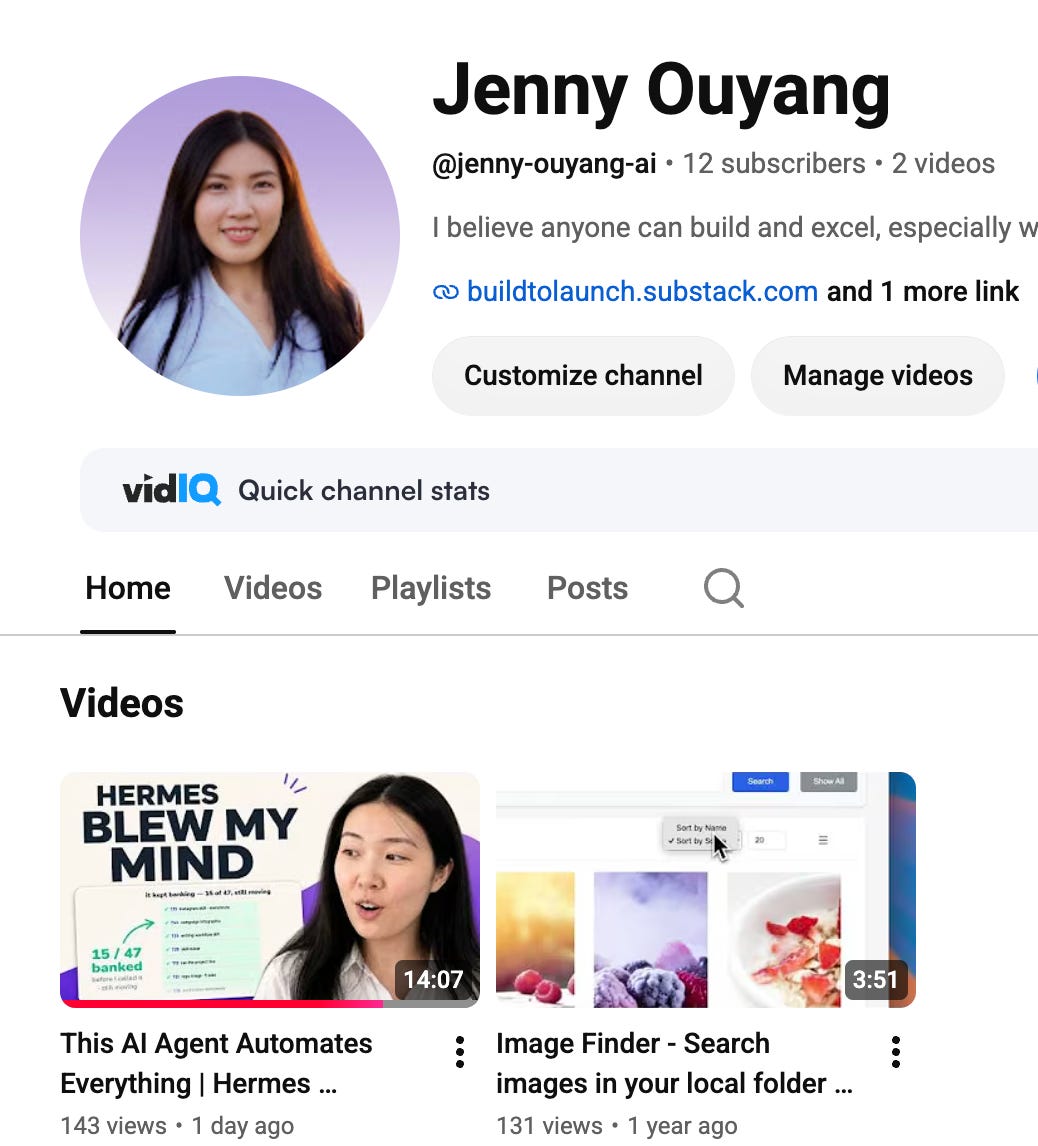
Last Saturday, I spent an entire day creating my first long-form YouTube video from my Hermes guide and finally published it.
That was fun.
But with a brand-new channel and only single-digit subscribers, I couldn't expect much engagement. So I started wondering: how could I extend its reach?
For many people, video isn’t the preferred format. They don’t sit down to watch, they listen.
YouGov found that 49% of American podcast listeners listen while doing household chores, 42% while commuting, and 29% while working out. During those hours, a video they can't listen to may as well not exist.
The obvious solution would have been to open a Transistor Starter account for $19/month and let it host the audio feed.
There was another option much closer to home: Substack now supports podcasts. But Substack is where my readers read.
Publishing the same idea twice, once as the article and once as an episode, clutters the inbox relationship the newsletter runs on. What I wanted was a listen button on
the work I already publish, not a second publication.
So the night the video went live, I sat down with my coding agent.
The audio was already finished. Earlier that day, Claude and Codex had cut a podcast version directly from the video.
Now it just needed somewhere to live.
I wrote a single prompt to store the audio and generate feed for Apple and Spotify.
Then I watched it work.
The machine did its part in 13 minutes. From building to testing to publishing.
The human work took about an hour. Not engineering, but all sorts of paperwork, and me understanding concepts.
By the end, the podcast was live on both platforms:
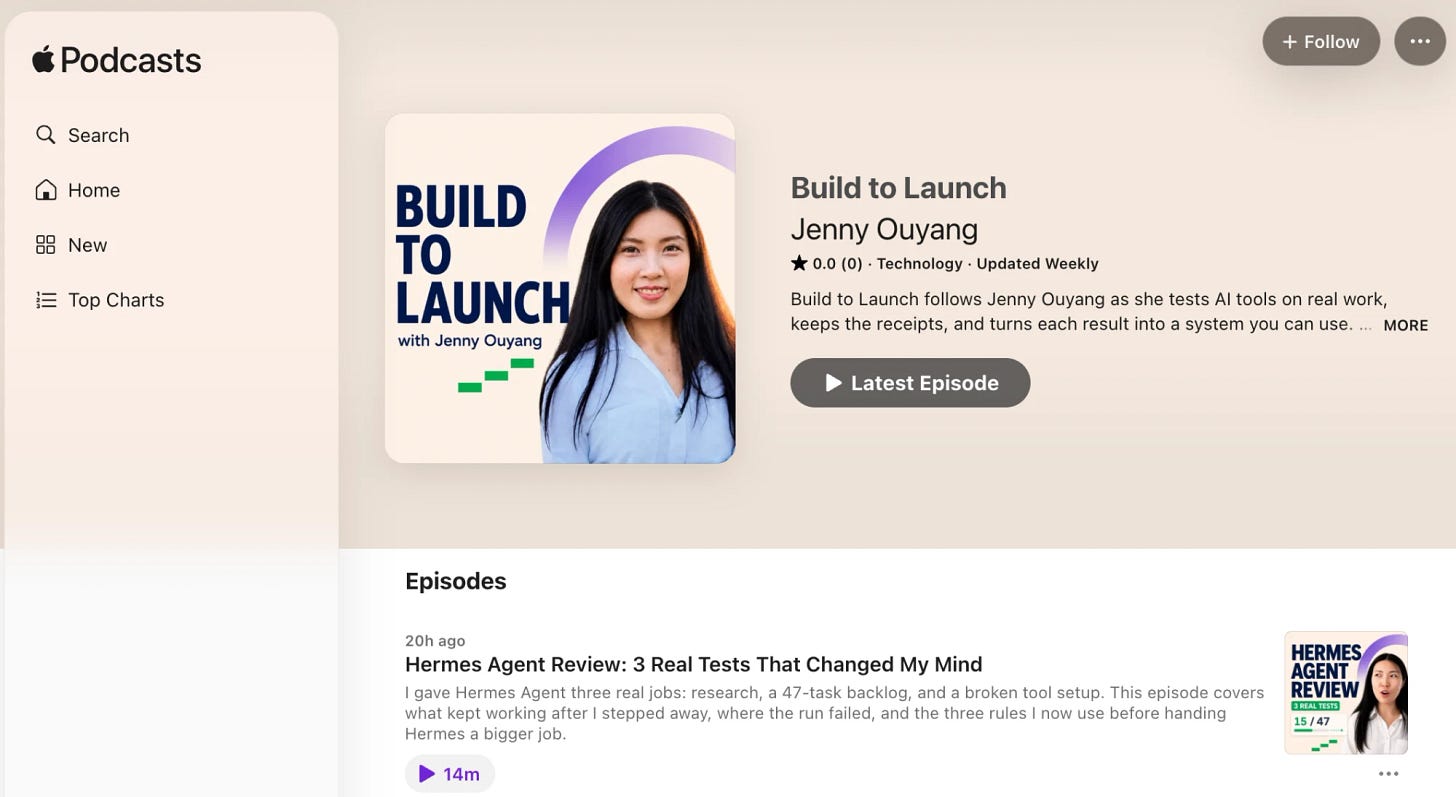
Build to Launch on Apple Podcasts
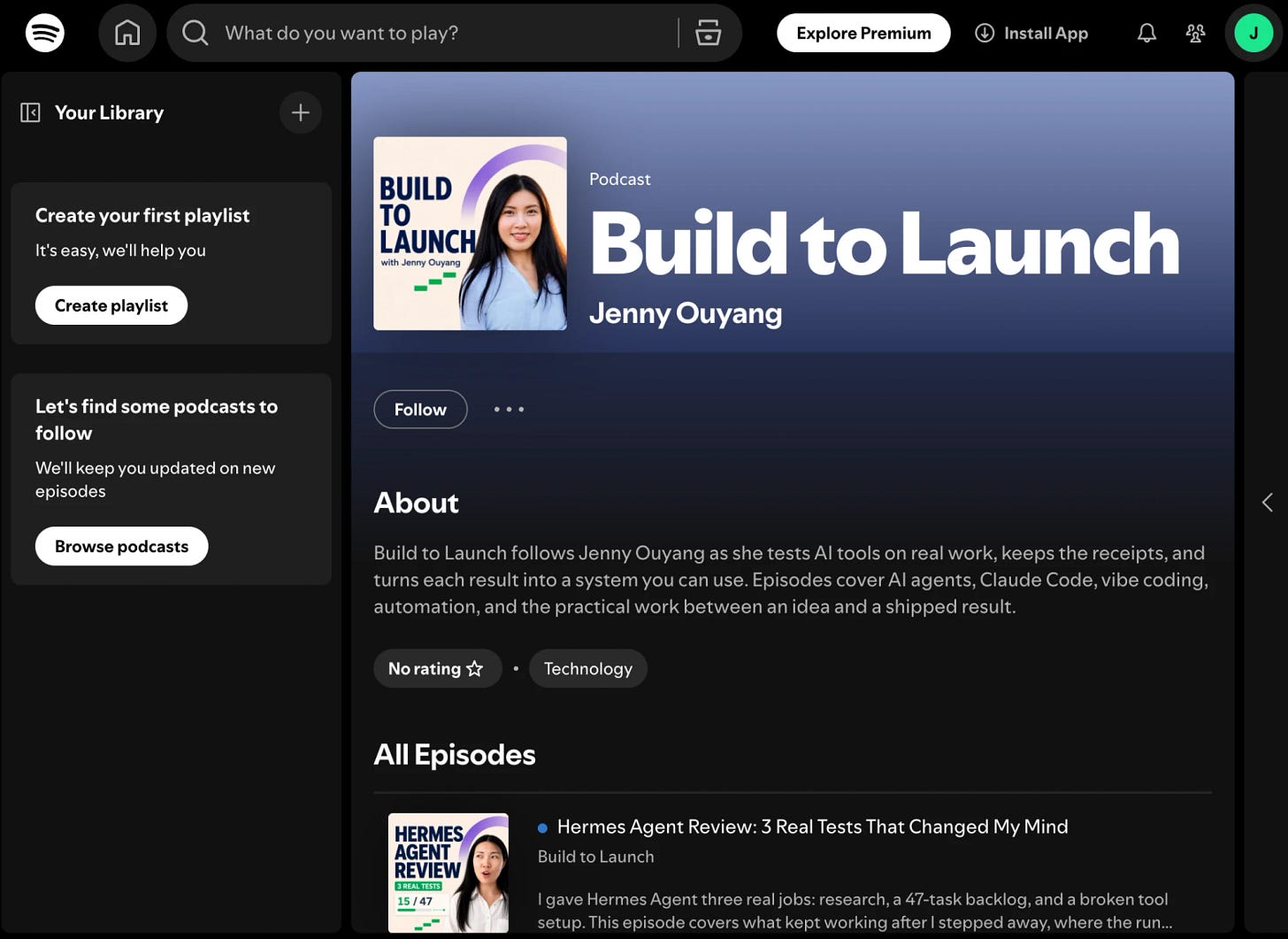
Transistor’s Starter plan costs $19 a month, or $190 when paid annually. My agents built a solution with $0 billable usage.
The next step is converting my older free posts into podcast episodes. Many of them work well in audio form, and now every approved episode is just one command away from being published.

Below in the paid content is the complete packet reconstructed from the build, with each stage separated by the points where you make a decision, approve something, or verify an account.
The master prompt is the exact one I used. The seven checkpoint prompts turn the real build process into a reusable handoff.
Give the technical sections to your coding agent. Keep the human steps for yourself.
By the end, you’ll own your RSS feed and have everything you need to publish on Apple Podcasts and Spotify.
This article continues for members
Join Build to Launch to read the full article, access all cohort content, and connect with other AI builders.