How I Built an SEO System That Tells Me What to Change Next
Step-by-step guide on an automated SEO monitoring system with Search Console, GA4, Bing, AI prompts, and a weekly report that tells you what to change next.
How have you been using SEO?
I wrote about using AI for SEO last year. Since then, my interest has only grown. I have been following how search affects both my Substack and my products.
There are plenty of tools that track visits and show how your pages are performing. But there is much more inside the raw data from Google Search Console.
Over the year, I have been giving that data to AI and using it to guide what I do next. It helped me see changes I had missed, understand how my pages affect each other, and find opportunities across both my articles and products.
So in this article, I am going to show you two best things I’ve learnt.
First, what changed when I started using AI for SEO and what new doors it opened for me.
Second, the complete setup you can use yourself: how to connect your data, what to give AI, how to prompt it, and which automations can run the monitoring for you.
By the end, you will have a system that keeps watching your pages and helps you decide what to do next, without manually going back and forth between reports.

What Changed When I Started Using AI for SEO
Once Claude could read my Search Console and Analytics data, I could ask it questions instead of opening another dashboard.
I started with the most practical one:
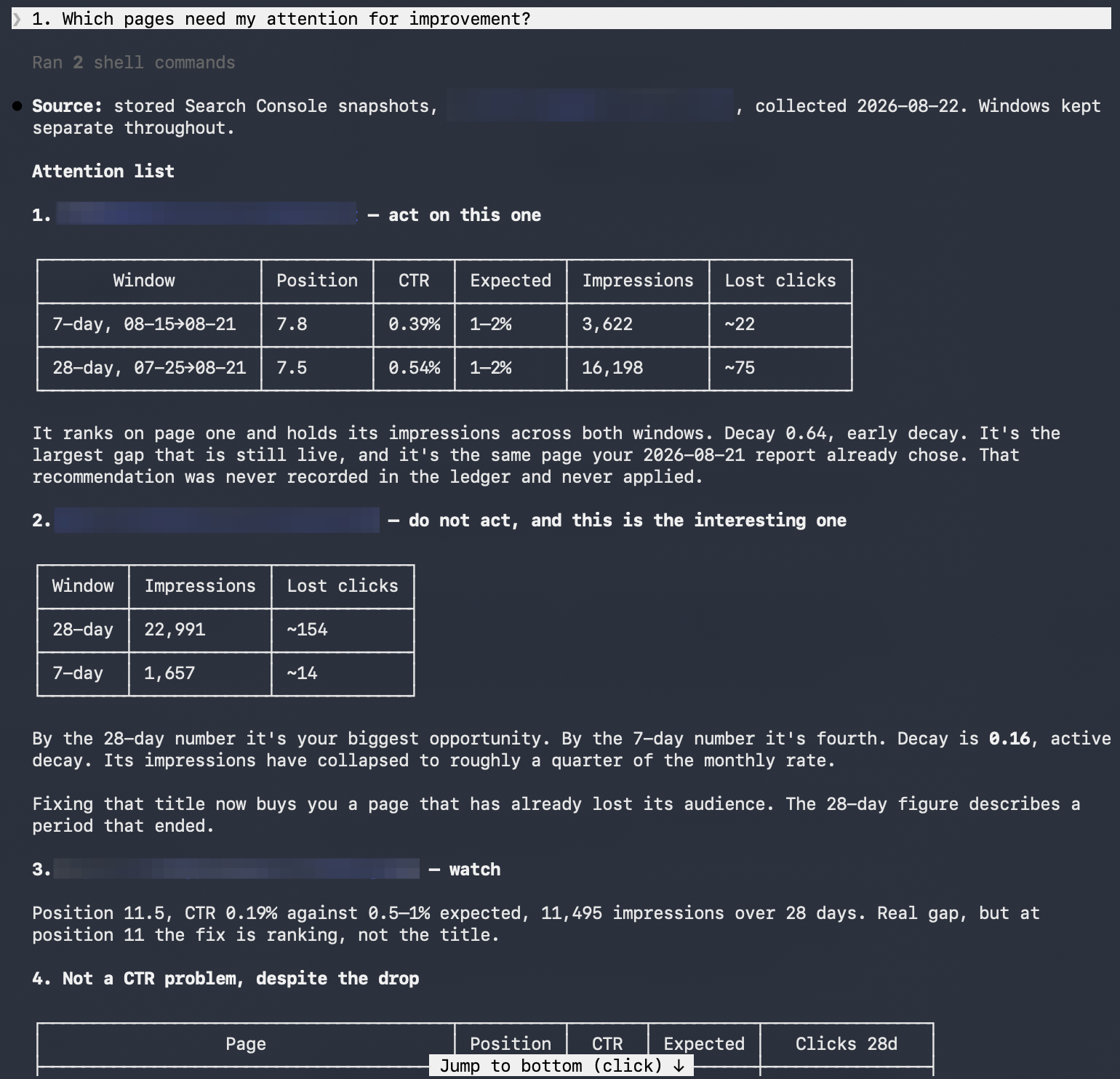
Which pages need my attention?
Claude separated the pages into three groups: act now, watch, and leave alone. One article was still ranking on page one and receiving thousands of impressions, but its click rate was far below the expected range. Another looked like a larger opportunity over 28 days, but its recent traffic had already collapsed. Acting on the older number would have meant fixing a page after the audience had moved on.
Then I asked:
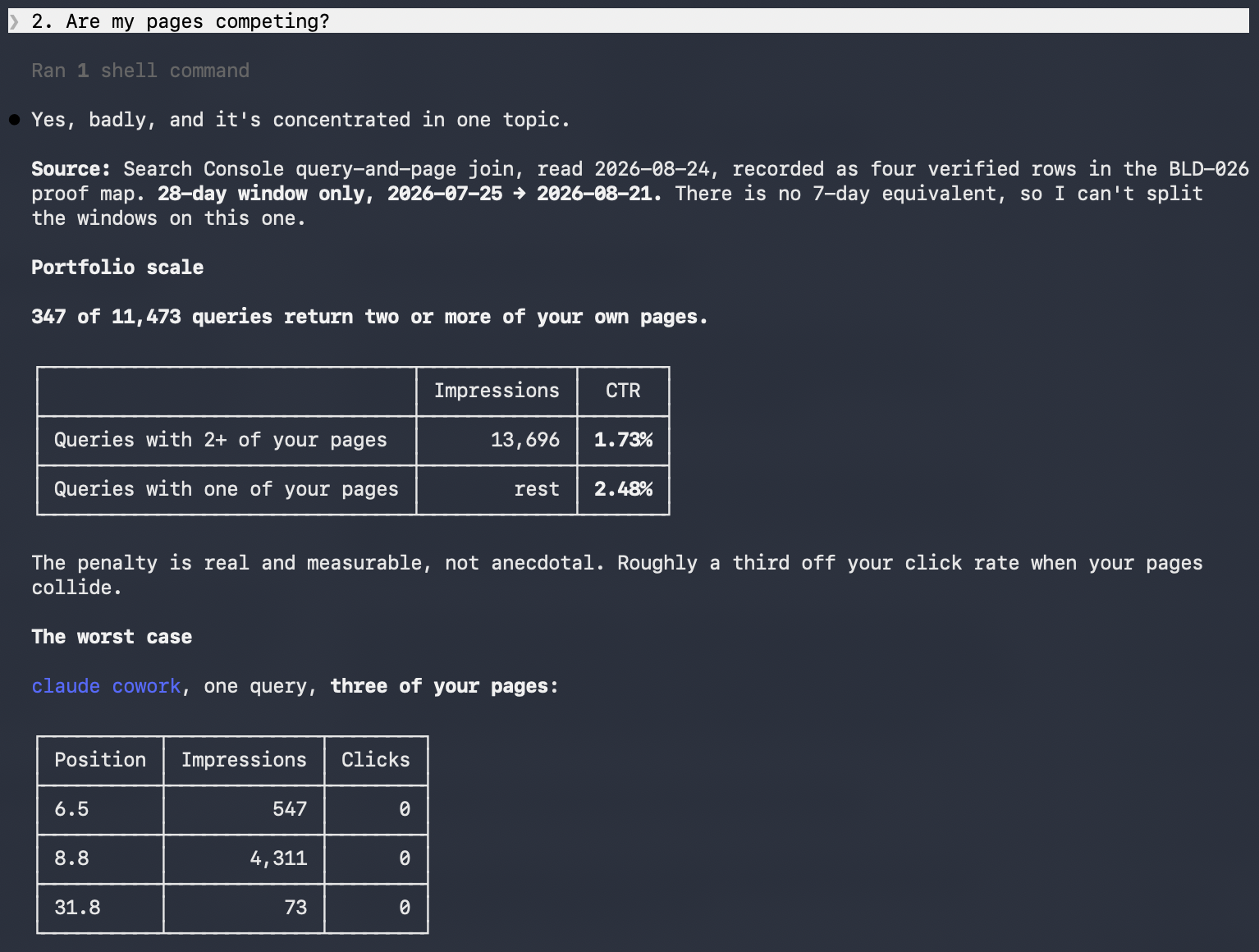
Are any of my pages competing with each other?
The answer was yes. Across 11,473 search queries, 347 returned two or more of my own pages. Those searches had a 1.73% click rate, compared with 2.48% when only one of my pages appeared.
The clearest example was claude cowork. Three of my articles appeared for the same search, collecting 4,931 impressions and zero clicks between them.
The next questions became broader from there.
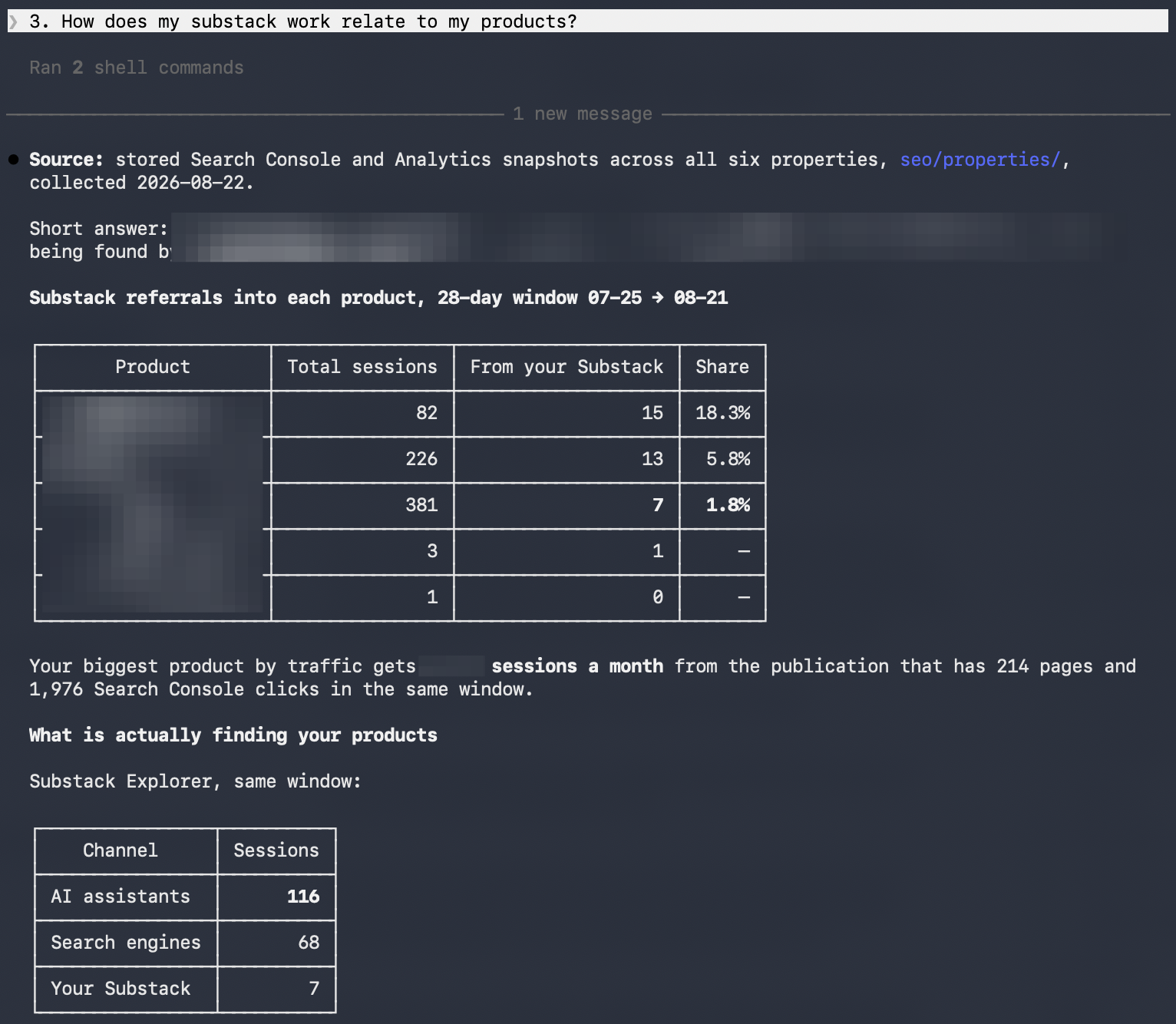
How does my Substack relate to my products?
Claude compared referral traffic across the publication and my product sites. It showed me which articles were sending readers onward, which products were being found through search or AI assistants, and where the connection between my writing and products barely existed.
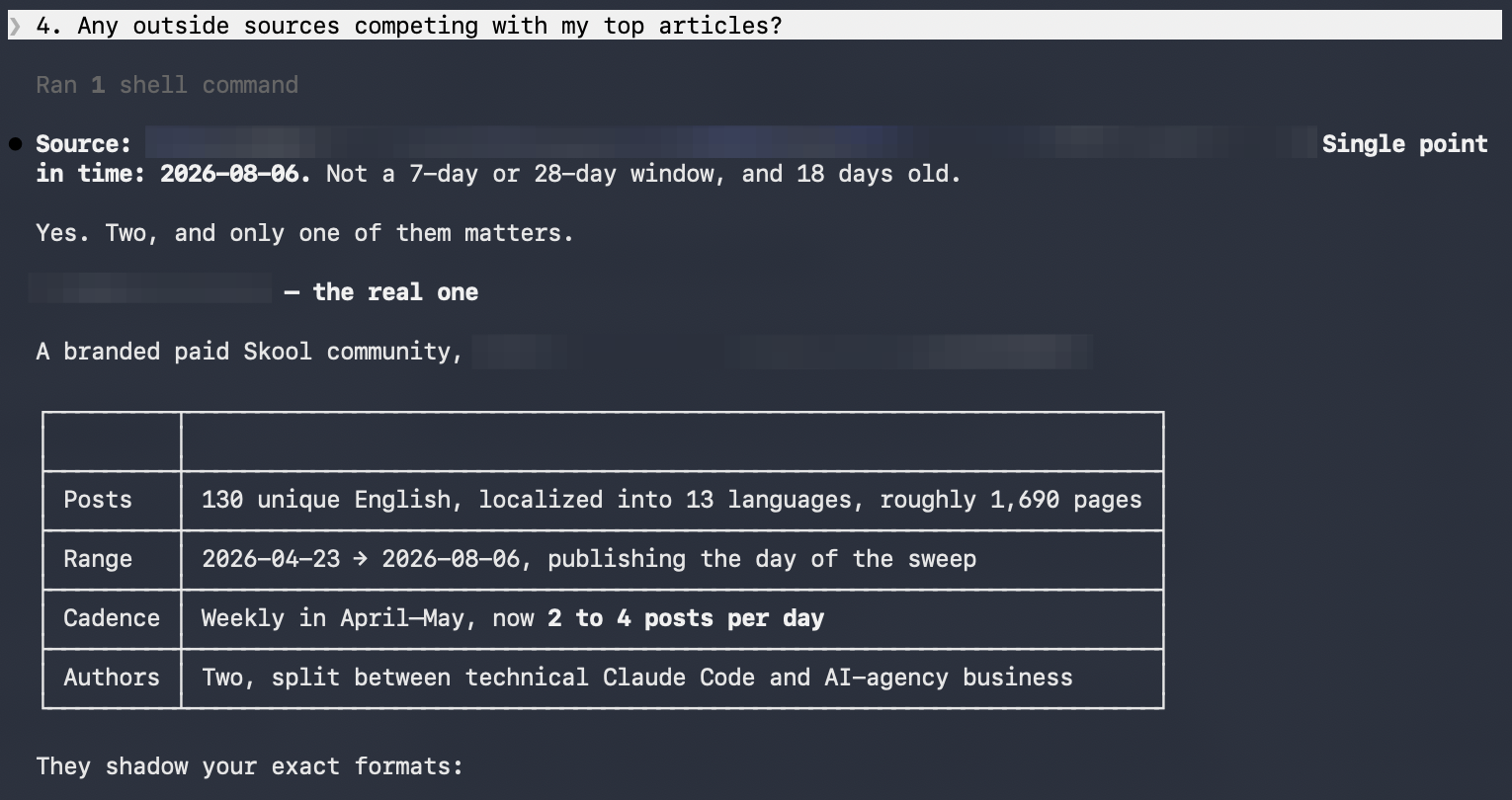
Are outside sites competing with my strongest articles?
A dated search-results check found a competing site publishing the same types of Claude Code articles at a much faster pace. That gave me context for a ranking change that my own performance data could show, but could not explain by itself.
Finally, I connected the search data to my ideas list and asked:
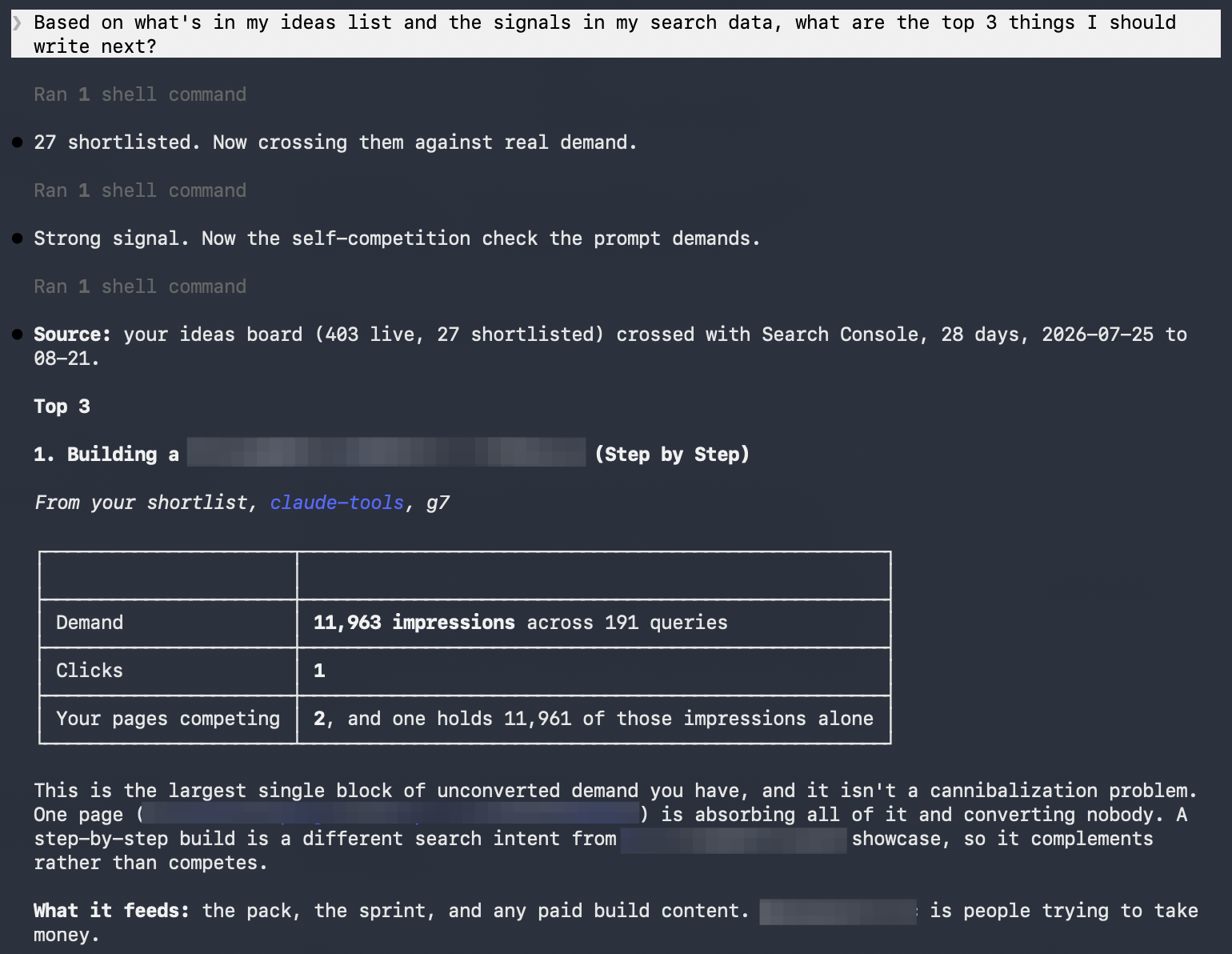
Based on what is in my ideas list and the signals in my search data, what are the top three things I should write next?
Claude crossed 27 shortlisted ideas with real demand. It recommended a step-by-step Stripe integration article first because related searches had produced 11,963 impressions across 191 queries, while my existing page had converted almost none of that demand.
It also told me what to leave out. One topic was already working. Another needed consolidation rather than another article. Several ideas sounded promising to me but had little supporting demand.
No single existing product could answer all five questions so adaptively.
Then I put the questions on a schedule
Once these questions worked, I wanted the same analysis every week.
I had already built a shared AI second brain and given it scheduled tasks. That system could watch sources, collect information, and keep receipts of what ran.
SEO became the feedback layer.
Each week, the task collects fresh Search Console, Analytics, and Bing data. It checks whether the connections are healthy, asks the same questions, and returns one dated report.
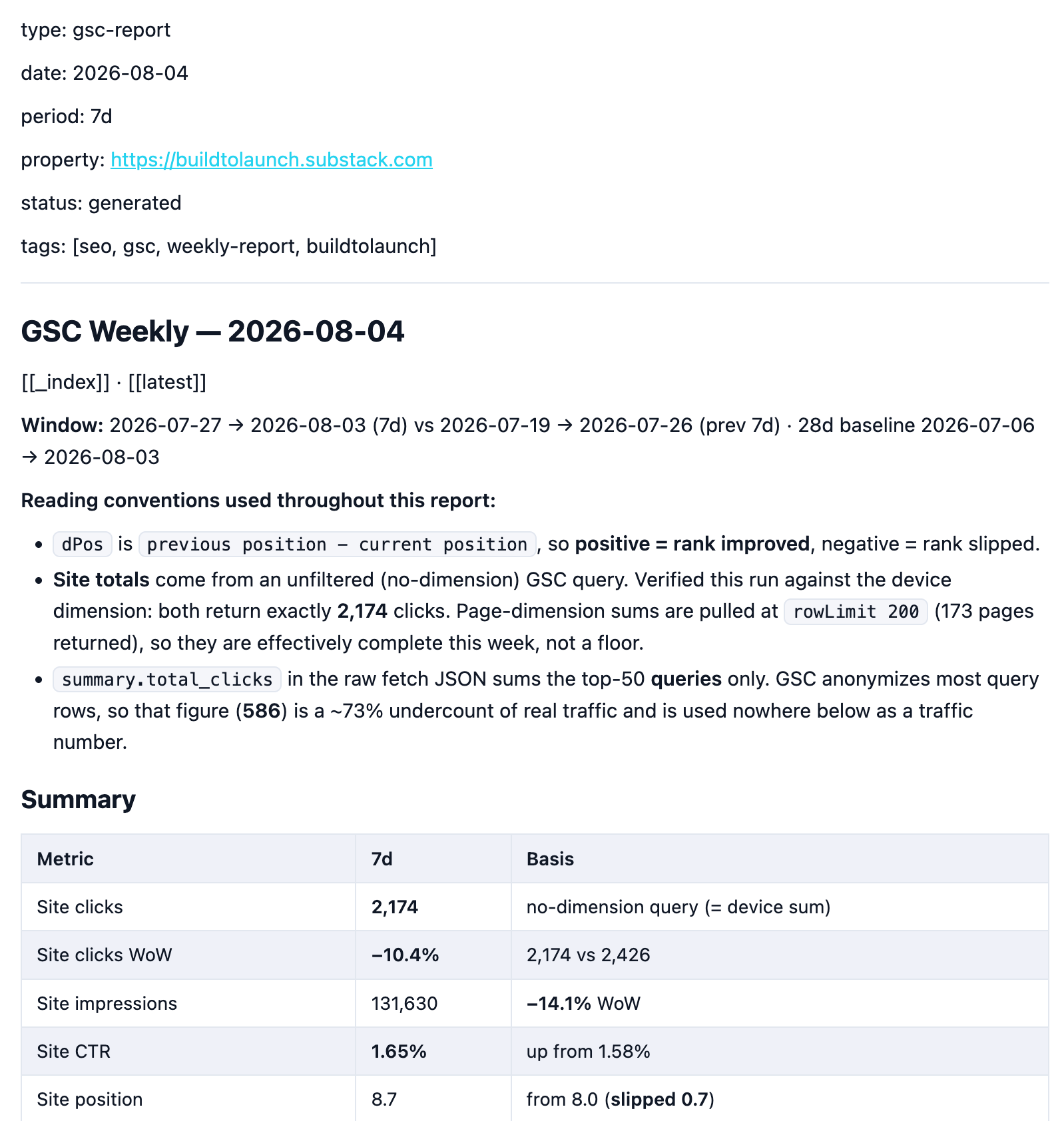
The report ends with one of four actions:
Improve an existing page.
Create a missing page.
Change the product or message based on demand.
Leave it unchanged and keep measuring.
I can also connect it to Daily Intel. AI can compare the topics appearing in my research with the demand already visible in search and recommend what may be worth writing or building next.
This one turns observation into judgment. Not more numbers. A decision, with the reasoning shown and the evidence attached, arriving on a schedule.
Everything above is what the system found. The rest of this article hands it over.
Below, you get:
the prompt set and the rules file as a download,
the walkthrough for connecting your own publication to Google Search Console and Analytics.
how to set up automated search data updates, so the data comes to you instead of you exporting it by hand.
how to set up scheduled job that delivers one weekly report with suggestions.
And how to widen it: add more properties, your product pages, and your social surfaces (tiktok, instagram, youtube, etc), including the one limit there that nobody else will tell you about.
First, download the SEO system package with the skills, prompts, scripts, weekly scheduler template, report examples and the setup guides for AI.
This article continues for members
Join Build to Launch to read the full article, access all cohort content, and connect with other AI builders.